
SHANGYANG TECHNOLOGY CO.,LTD
SHANGYANG TECHNOLOGY CO.,LTD
When running a beauty business or working as a professional makeup artist, selecting the right tools for your clients is paramount to delivering exceptional results. Among all makeup tools, the face brush stands out as one of the most critical instruments in achieving flawless foundation application and overall makeup perfection. The choice of a high-quality face brush can significantly impact client satisfaction, application efficiency, and the longevity of makeup looks. Understanding the key factors that contribute to brush quality will help you make informed decisions that benefit both your professional reputation and client experience.
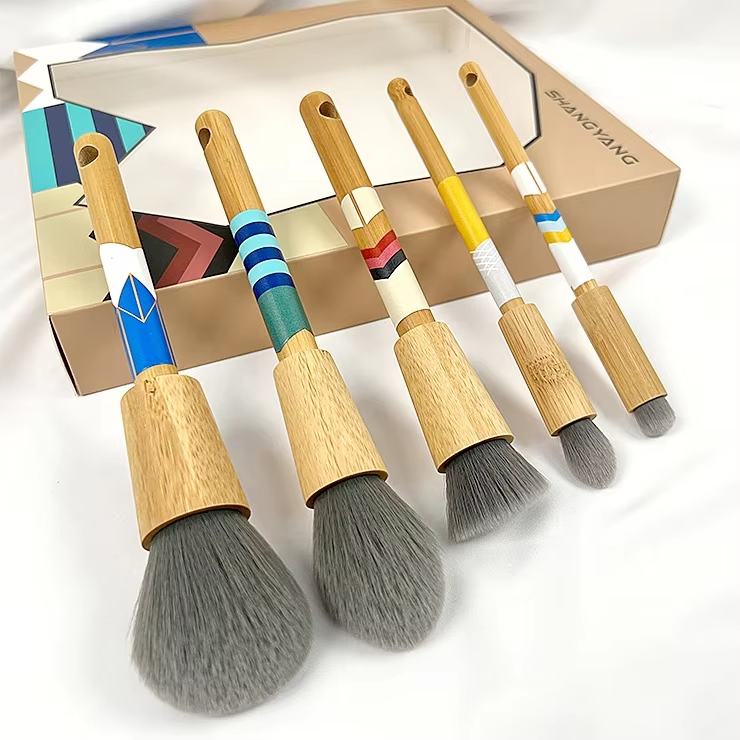
The type of hair used in a high-quality face brush fundamentally determines its performance characteristics and suitability for different makeup products. Natural hair brushes, typically made from animal hair such as goat, squirrel, or pony, offer exceptional powder pickup and blending capabilities due to their natural scale structure. These brushes excel with powder-based products like setting powder, bronzer, and blush, creating smooth, seamless application that professional makeup artists have relied upon for decades.
Synthetic hair brushes have undergone significant technological advancement in recent years, now offering performance that rivals or even exceeds natural options in many applications. Modern synthetic bristles are engineered to mimic the beneficial properties of natural hair while providing additional advantages such as easier cleaning, better durability, and consistent performance across different product formulations. When selecting a high-quality face brush for liquid or cream products, synthetic options often prove superior due to their non-porous nature that prevents product absorption.
The density of bristles in a high-quality face brush directly influences the coverage level and blending capability you can achieve. Densely packed brushes provide fuller coverage and are ideal for building up color intensity or creating dramatic looks, while less dense brushes offer sheerer application perfect for natural, everyday makeup. Professional makeup artists often maintain multiple brush densities to accommodate various client preferences and occasion requirements.
Understanding how fiber density affects product pickup and release is crucial for achieving consistent results across different clients and skin types. A well-constructed high-quality face brush will maintain its density over time, ensuring that the performance characteristics you rely upon remain stable throughout the brush's lifespan. This consistency is particularly important in professional settings where predictable results are essential for client satisfaction.
The shape of a high-quality face brush determines its optimal application method and the finish it produces on the skin. Flat foundation brushes excel at buffing liquid foundation into the skin, creating a smooth, airbrushed finish that clients often prefer for special events or photography. The flat surface allows for precise control over product placement and blending, making it easier to achieve even coverage across different facial contours.
Rounded or dome-shaped brushes offer different advantages, particularly for stippling techniques and creating natural-looking coverage. These brush shapes work exceptionally well for blending cream products and creating seamless transitions between different makeup zones. When choosing a high-quality face brush for your kit, consider the variety of techniques you employ and select shapes that complement your preferred application methods.
The size of a high-quality face brush should align with both the area being covered and the desired application speed. Larger brushes cover more surface area quickly, making them ideal for base application and time-sensitive appointments. However, smaller brushes provide greater precision around delicate areas like the eye zone, nose, and lip perimeter where careful product placement is crucial.
Professional makeup artists often find that maintaining a range of brush sizes allows for greater versatility in technique and better adaptation to individual client facial structures. A comprehensive high-quality face brush collection should include both full-face application brushes and detail brushes to ensure optimal results across all makeup applications.
The handle construction of a high-quality face brush significantly impacts user comfort during extended use and overall tool longevity. Professional-grade handles are typically crafted from materials that provide optimal weight balance, preventing hand fatigue during long makeup sessions. The ergonomic design should allow for precise control while maintaining comfort throughout the application process.
Handle length also plays a crucial role in brush functionality and storage convenience. Longer handles provide better leverage and control for detailed work, while shorter handles may offer improved portability for travel kits. The choice between different handle lengths should consider your specific working environment and client service style.
The ferrule, which connects the brush head to the handle, represents a critical structural component that determines the long-term reliability of a high-quality face brush. High-grade ferrules are typically constructed from rust-resistant metals and feature secure crimping that prevents bristle shedding and maintains brush shape over time. Professional brushes often incorporate double ferrules or specialized securing methods that enhance durability under frequent use and cleaning.
Quality ferrule construction also impacts the brush's ability to maintain its original shape after repeated use and washing. A well-constructed high-quality face brush will retain its form and performance characteristics for years when properly maintained, making it a worthwhile investment for professional applications.
Maintaining hygiene standards with your high-quality face brush collection is essential for client safety and brush longevity. Professional makeup applications require thorough cleaning protocols between clients to prevent cross-contamination and maintain optimal brush performance. Different brush materials may require specific cleaning approaches, with synthetic brushes generally offering easier maintenance than natural hair options.
Establishing a consistent cleaning routine helps preserve the integrity of your high-quality face brush investment while ensuring compliance with industry hygiene standards. Professional brush cleaners and proper drying techniques can significantly extend brush lifespan while maintaining the performance characteristics that make quality brushes valuable tools.
Proper storage is crucial for maintaining the shape and condition of your high-quality face brush collection. Professional brush storage solutions should protect bristles from damage while allowing adequate air circulation for complete drying after cleaning. Brush guards, stands, and protective cases all serve different purposes in maintaining brush quality over time.
Temperature and humidity control in storage areas can also impact brush longevity, particularly for natural hair brushes that may be sensitive to environmental conditions. Creating an optimal storage environment helps ensure that your high-quality face brush investment continues to deliver professional results throughout its extended lifespan.
While a high-quality face brush may require a larger initial investment compared to budget alternatives, the long-term value proposition often justifies the higher cost. Professional-grade brushes typically offer superior durability, consistent performance, and better client results, all of which contribute to business success and client retention. The enhanced application quality achievable with premium brushes can justify higher service prices and improve overall profitability.
Calculating the cost per use over the expected lifespan of a high-quality face brush often reveals significant value compared to repeatedly replacing lower-quality alternatives. Professional makeup artists frequently find that investing in quality tools reduces long-term costs while improving service quality and client satisfaction rates.
Selecting a high-quality face brush from reputable manufacturers provides additional assurance regarding performance consistency and quality standards. Established brands typically maintain strict quality control processes and offer customer support services that enhance the overall ownership experience. Brand reputation often correlates with product reliability and performance predictability in professional applications.
Quality assurance programs and warranties offered by reputable brush manufacturers provide additional protection for your investment and demonstrate confidence in product durability. These factors should be considered alongside performance characteristics when evaluating different high-quality face brush options for professional use.
The replacement frequency for a high-quality face brush depends on usage intensity, maintenance practices, and performance standards. Professional makeup artists using brushes daily may need replacement every 1-2 years, while occasional users might extend this to 3-5 years. Signs that indicate replacement necessity include excessive bristle shedding, loss of shape retention, reduced pickup capability, or difficulty achieving desired application results. Proper cleaning and storage can significantly extend brush lifespan, making quality brushes a worthwhile long-term investment.
Natural hair brushes excel with powder products due to their scale structure that grips and releases powder effectively, while synthetic brushes perform better with liquid and cream formulations because they don't absorb product. Natural brushes typically provide softer application and superior blending for powder products, whereas synthetic options offer more precise control and easier cleaning. Modern synthetic technology has significantly improved, with high-end synthetic brushes now matching or exceeding natural brush performance in many applications while offering additional durability and hygiene benefits.
Proper maintenance involves daily spot cleaning with brush cleaners between clients and weekly deep cleaning with gentle shampoo or specialized brush soap. Rinse brushes with lukewarm water, avoiding the ferrule area to prevent loosening, and reshape while damp before laying flat to dry. Never dry brushes upright as water can seep into the ferrule and damage the adhesive. For professional use, consider having multiple sets to allow proper drying time between uses and maintain hygiene standards.
For sensitive skin, prioritize ultra-soft synthetic bristles that minimize irritation while providing gentle application. Oily skin benefits from synthetic brushes that don't absorb oils and maintain consistent performance throughout application. Dry skin works well with both natural and synthetic options, but softer bristles help avoid exacerbating dryness. Mature skin requires gentle, densely packed brushes that provide coverage without tugging or emphasizing texture. Consider your client base when selecting brushes to ensure optimal results across different skin types and sensitivities.
 EN
EN
 AR
AR BG
BG HR
HR CS
CS DA
DA NL
NL FI
FI FR
FR DE
DE EL
EL HI
HI IT
IT JA
JA KO
KO NO
NO PL
PL PT
PT RO
RO RU
RU ES
ES SV
SV CA
CA TL
TL IW
IW ID
ID LV
LV LT
LT SR
SR SK
SK SL
SL UK
UK VI
VI SQ
SQ ET
ET GL
GL HU
HU TH
TH TR
TR